
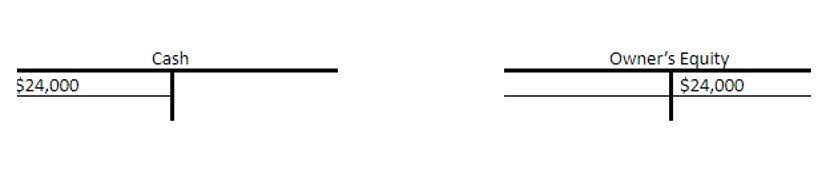
These include the ownership of tangible assets, financial resources, and accounts receivable and inventory. They are thus the counterpart to liabilities, which include debts, mortgages, tax payments and account payables. One of the most apparent advantages of a chart of accounts is that it can give you an excellent insight into your company’s revenue. A current ratio above 1 indicates that a company has sufficient short-term assets to cover its short-term obligations, which is generally considered healthy.

Equity Accounts
A company with a high level of liabilities may be seen as risky by investors, as it may have difficulty repaying its debts. This can impact the company’s ability to raise capital and may limit its growth potential. There is also a third type of account that we should mention – your liability account. A liability account is used to track things that are basically the opposite of an asset—anything that costs you money to get rid of. The most common liability is credit issued from a vendor or a bank (lines of credit, credit card debt, accounts liabilities in accounting payable, etc.). Understanding how liabilities affect key financial ratios like debt-to-equity ratio and current ratio provides valuable insight into a company’s ability to meet its financial obligations.
Frequently Asked Questions about accounting liability accounts
If you don’t update your books, your report will give you an inaccurate representation of your finances. Unlike most other liabilities, unearned revenue or deferred revenue doesn’t Mental Health Billing involve direct borrowing. Your business has unearned revenue when a customer pays for goods or services in advance. Then, the transaction is complete once you deliver the products or services to the customer. Because accounting periods do not always line up with an expense period, many businesses incur expenses but don’t actually pay them until the next period.
Examples of Current Liabilities:
As liabilities impact both the balance sheet and cash flow statement, businesses must carefully consider their decisions regarding debt, tax management, and other obligations. These are the periodic payments made by a lessee (the business) to a lessor (property owner) for the right to use an asset, such as property, plant or equipment. In accounting terms, leases can be classified as either operating leases or finance leases. An operating lease is recorded as a rental expense, while a finance lease is treated as a long-term liability and an asset on the balance sheet. Accrued Expenses are expenses that a company has incurred but not yet paid. These expenses are recorded in the income statement and the corresponding liability is reported in the balance sheet.

Bonds are essentially contracts to pay the bondholders the face amount plus interest on the maturity date. This formula shows what would remain of the company’s assets if all assets unearned revenue were liquidated and all liabilities were settled. Equity thus represents the book value of a company and is a direct indicator of how well a company is positioned financially.

Overall, effective management of liability accounts is critical for maintaining a healthy cash flow and ensuring the long-term financial stability of a company. By properly tracking and managing these obligations, companies can make informed financial decisions and avoid cash flow issues in the future. Entities that are responsible for auditing liability accounts include external auditors, internal auditors, and government agencies. These entities review the company’s financial statements to ensure that the liabilities are accurately recorded and disclosed. When a customer purchases goods or services on credit, the business owes them a debt until the payment is made.
Liabilities
- However, the current portion of this loan, which represents the amount payable in the upcoming year, will be presented under current liabilities.
- Accounting liability accounts are where these obligations live in your general ledger.
- This helps catch mistakes early and keeps your clients’ books clean.
- Liabilities are an integral part of the three basic financial statements used to report a company’s financial situation.
- Moreover, some liabilities, such as accounts payable or income taxes payable, are essential parts of day-to-day business operations.
- This is the second part in an ongoing series of articles diving into accounts and how they are used in the context of accounting.
In other words, liabilities are the debts and other financial obligations that a business owes to its creditors and other stakeholders. There are five different types of accounts in accounting that provide a structure to the chart of accounts, namely assets, expenses, liabilities, equity, and revenue. Given that their role is to define your business’s channels for spending or receiving money, each account category can be further broken down into several subcategories. It’s also important to note that the five major accounts are interrelated. Therefore, a change in one account triggers a chain reaction, making the other accounts change as well.
